
Breast self exam practices are an important part of breast self-awareness. Breast cancer remains one of the most common cancers affecting women in the United States and Canada. While advanced screening tools like mammograms play a critical role in early detection, understanding your own body is equally important. Becoming familiar with how your breasts normally look and feel through a regular breast self exam can help you notice subtle changes early and take timely action.
A breast self exam is not meant to diagnose cancer. Instead, it supports breast self-awareness by helping individuals recognize physical changes that may require medical attention. This visual guide for performing a breast self exam for breast cancer walks you step by step through the process, explains what to look for, and clarifies when to consult a healthcare provider.
Why Breast Self-Awareness Matters
Regular breast self-exams help a person become familiar with the normal appearance and texture of their breasts. This awareness makes it easier to detect changes such as new lumps, skin alterations, or nipple changes.
According to the American Cancer Society, routine breast self-exams are no longer recommended as a formal screening method due to the risk of false-positive or false-negative results. However, knowing what is normal for your body remains essential. The American College of Obstetricians and Gynecologists refers to this approach as breast self-awareness.
When combined with recommended mammogram screening schedules and professional medical advice, breast self-awareness can support early detection and more effective treatment.
What Is a Breast Self-Exam
A breast self-exam involves two main parts:
- A visual inspection in front of a mirror
- A physical examination while standing and lying down
These steps allow you to examine not only the breasts but also the nipples, underarm area, lymph nodes, and the wider chest region up to the collarbone and upper abdomen.
The National Breast Cancer Foundation outlines three essential steps for an effective self-exam, which we explain in detail below.
Step 1 Visual Breast Exam in Front of a Mirror
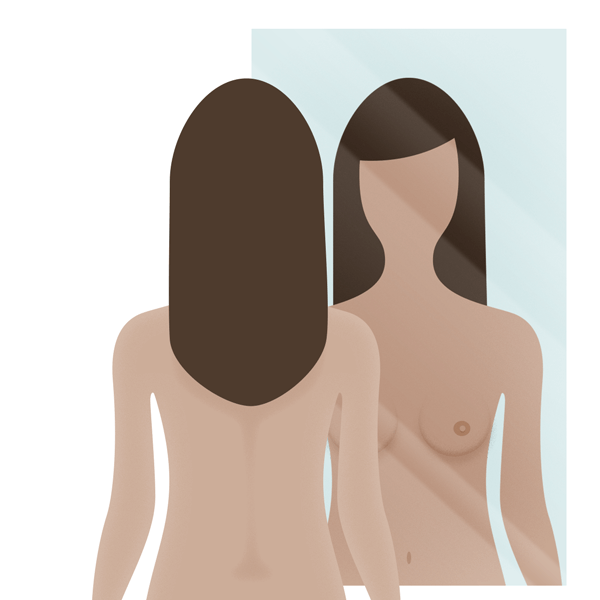
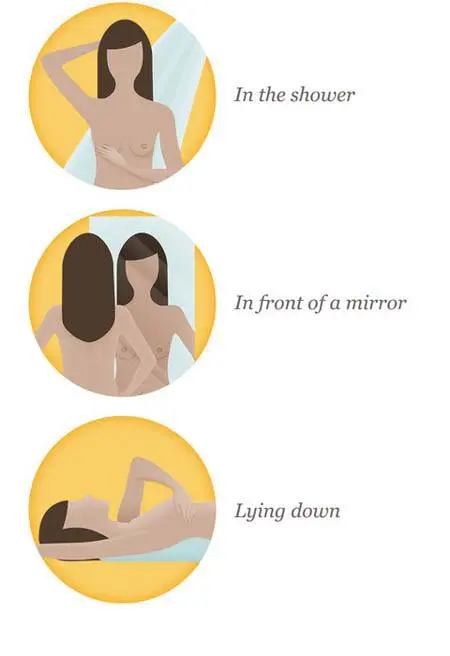
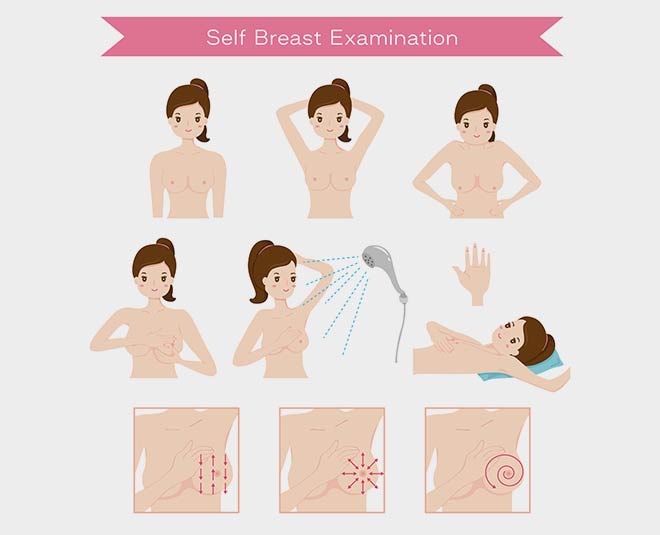
Begin by standing topless in front of a mirror in a well-lit room.
With Arms Relaxed at Your Sides
Check for changes in:
- Breast shape or size
- Skin color or texture
- Dimpling, puckering, or pitting
- Nipple position or appearance
- Vein patterns, especially if veins appear more prominent
With Arms Raised Overhead
Raise both arms and look again for the same changes. Then gently lean forward to see if both breasts move evenly.
Visual changes are often subtle, which is why repeating this exam regularly can help you notice differences over time.
Step 2 Physical Exam While Standing
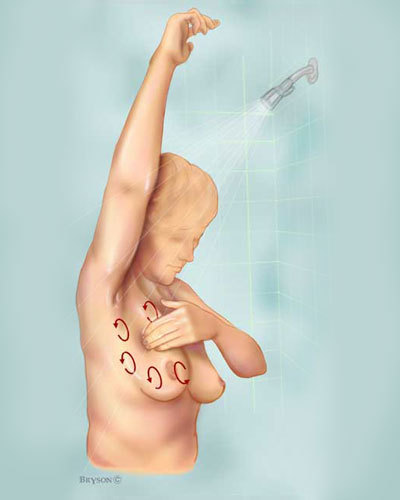

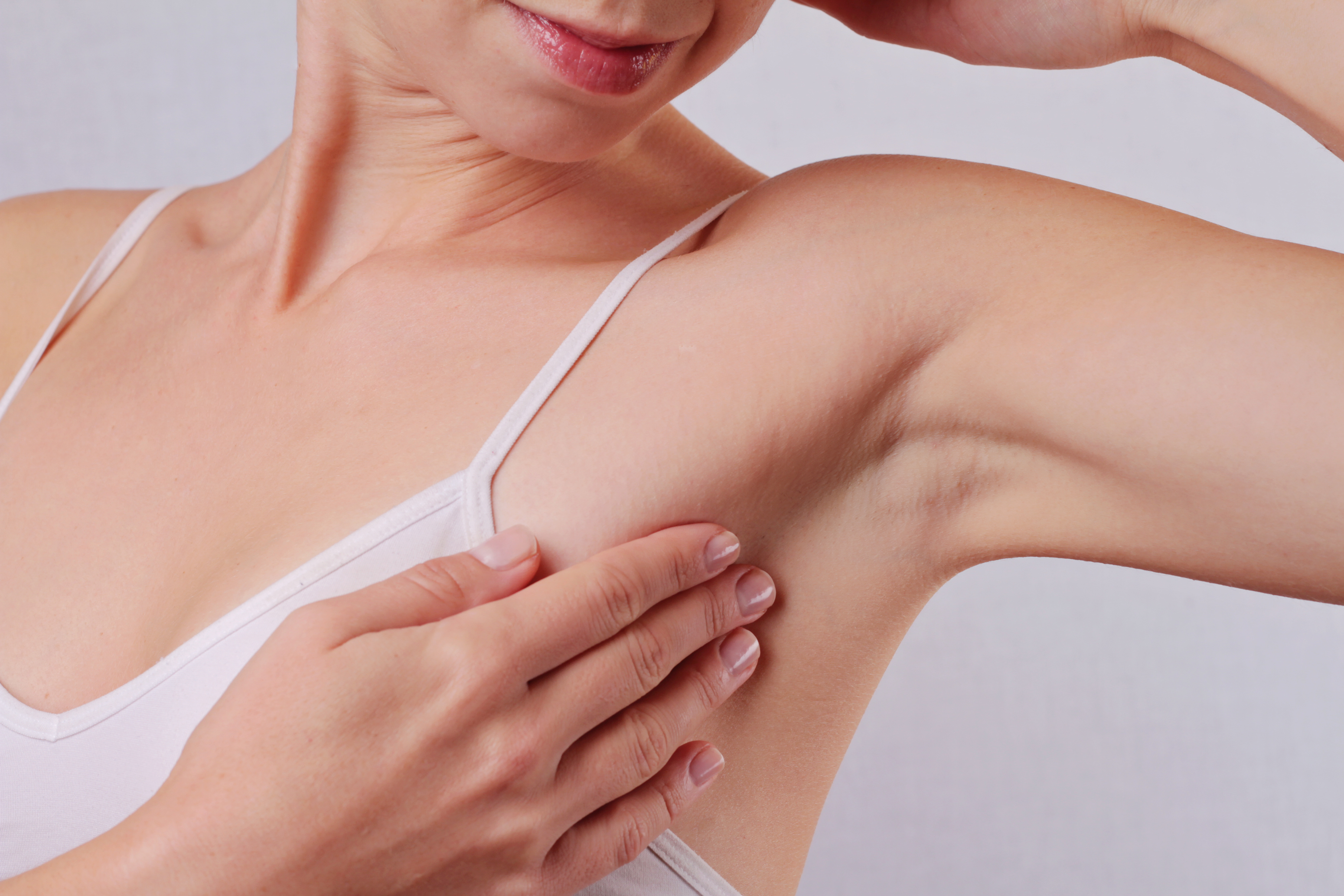
Many people find it easiest to perform this step in the shower because wet skin allows fingers to glide smoothly.
How to Perform the Standing Exam
- Use the pads of the three middle fingers
- Apply light, medium, and firm pressure
- Move in small circular motions
- Cover the entire breast, from the outer edges to the nipple
- Check the underarm and chest area up to the collarbone
You can use circular, vertical up-and-down, or wedge-shaped patterns. The most important thing is consistency so you thoroughly check all areas.
Step 3 Physical Exam While Lying Down


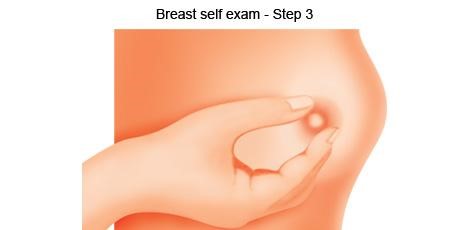
Lying down helps spread breast tissue evenly over the chest wall, making it easier to detect abnormalities.
How to Perform the Lying Down Exam
- Place a pillow under your right shoulder
- Raise your right arm above your head
- Use your left hand to examine the right breast
- Apply light, medium, and firm pressure
- Check from under the arm to the chest bone and collarbone
- Gently squeeze the nipple to check for discharge
Repeat these steps for the left breast.
Symptoms and Changes to Look Out For
Many people with breast cancer experience no symptoms at all, especially in early stages. However, some warning signs may appear.
Breast Changes
- A new lump or thickening
- Unexplained change in breast size or shape
- Dimpling or puckering of the skin
- Redness or skin irritation
- Persistent pain or burning sensation
Nipple and Areola Changes
- Nipple turning inward
- Changes in color or texture
- Scaly or ridged skin
- Clear, milky, yellow, or bloody discharge
- Tenderness or swelling
Lymph Node Changes
Lymph nodes near the breasts are located mainly in the armpits and near the collarbone. Changes may include:
- Swelling or lumps in the underarm
- Thickened skin in the armpit
- Swelling near the collarbone
Lymph node changes can also occur due to infections, autoimmune conditions, or vaccines such as COVID-19 vaccines. Still, unexplained swelling should always be discussed with a doctor.
When to Perform a Breast Self-Exam
While the American Cancer Society does not recommend routine self-exams as a screening tool, BreastCancer.org suggests checking your breasts once per month to support self-awareness.
- Before menopause Perform the exam a few days after your menstrual cycle ends
- After menopause Choose a consistent day each month
Breast tissue naturally varies in texture. Some areas may feel grainy or lumpy, and this does not always indicate cancer. Regular self-exams help you recognize what is normal for your body.
Breast Self-Exams and Mammograms
A breast self-exam is not a substitute for professional screening. Mammograms remain the most effective tool for detecting breast cancer early, especially before symptoms appear.
False-positive results from self-exams can cause anxiety, while false-negative results may lead to delayed screening. This is why healthcare providers emphasize a balanced approach that includes self-awareness, routine mammograms, and medical consultation when concerns arise.
When to See a Doctor
You should contact a healthcare provider if you notice:
- A new or persistent lump
- Skin or nipple changes that do not resolve
- Unexplained swelling in one breast
- Discharge from the nipple
- Changes affecting only one breast
Early evaluation does not always mean cancer, but it ensures peace of mind and timely care.